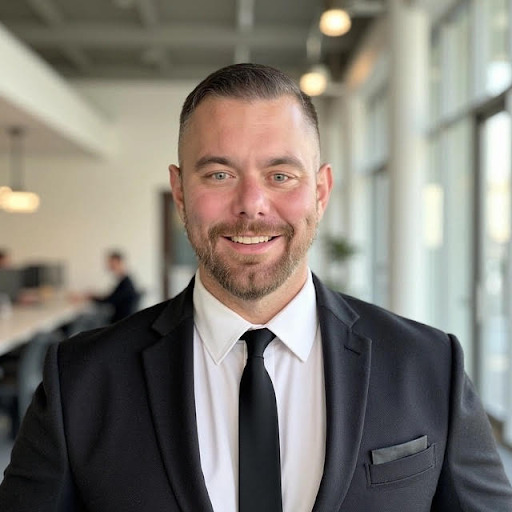
Recovery does not begin in the recovery room. It begins with the choices made before the first incision — about technique, pain management strategy, and the specific person on the table rather than the average patient a protocol was designed for. Dr. Andrew Hummel, MD, builds recovery into the procedure itself.
Key Takeaways
- Precision anesthesiology means every clinical decision is tailored to the individual patient — their anatomy, history, comorbidities, and goals — not a general protocol.
- Dr. Andrew Hummel uses ultrasound-guided regional anesthesia and neuraxial techniques to maximize comfort and significantly reduce post-operative opioid requirements.
- Iovera° cryoneurolysis is an FDA-approved, non-opioid cold therapy that Dr. Hummel applies pre-surgically for total knee arthroplasty — reducing post-operative pain burden and supporting faster recovery.
- Post-operative nausea, pain levels, recovery speed, and hospital stay length, all trace back directly to decisions made in the operating room.
There is a version of anesthesiology where the job is to apply a protocol, manage what comes up, and hand the patient off to recovery. That version is not without value. But it is not the version practiced by Dr. Andrew Hummel, MD, anesthesiology specialist — and for patients, that difference shows up in how they feel when they wake up, and how quickly they go home.
Dr. Hummel's approach is perioperative, meaning his involvement spans the full surgical day. It is also deeply individualized, meaning the plan for any given patient is built around who that patient actually is. Those two things together — continuity and specificity — are what precision means in an operating room context.
The Problem With Average
Standard anesthetic protocols exist because medicine needs consistency and reproducibility. A protocol tested across thousands of patients is a reasonable starting point. The problem is that you are not a thousand patients. You are one, with your own anatomy, medication history, comorbidities, and set of factors that may or may not fit what the protocol assumed.
Dr. Hummel has encountered patients who illustrated this gap in ways that were anything but routine.
The High-Risk Maternal Spine Case
A woman arrived at 38 weeks pregnant, with severe scoliosis and a history of multiple prior lumbar surgeries. Her previous anesthesiologist had described her spine as unapproachable. She was terrified — not just of the surgery, but of the possibility that she might have to be fully unconscious for her daughter's birth.
Dr. Hummel reviewed her MRI before she ever got to the operating room, mapped the anatomy carefully, and spent time at her bedside that the standard workflow does not budget for. He placed a successful spinal on the first attempt using a lateral approach. She was awake when her daughter was born. "Everyone said it couldn't be done," she told him afterward. His response: he had learned not to say that until he had actually looked.
The Complex Geriatric Cardiac Case
There was an 87-year-old man — moderate aortic stenosis, a pacemaker, and hip fracture from a fall in his kitchen. His family had quietly begun preparing themselves for the worst. His cardiologist had cleared him for surgery but flagged him as high perioperative risk.
The outcome was not determined by the procedure itself. It was determined by the planning that preceded it: a carefully titrated spinal chosen over general anesthesia to protect hemodynamic stability, direct coordination with cardiology before the first incision, and a clear pressor protocol in place before anything began. He spent one night on the hospital floor — not the ICU — and was in rehabilitation within 48 hours.
The Pediatric Anxieties Case
There was also a six-year-old who had already been through two surgeries and had learned, with some justification, to associate hospitals with fear. Her parents warned Dr. Hummel in pre-op that the last induction had taken four nurses and a lot of tears. He did not start with the mask. He started with her stuffed rabbit — Gerald, who apparently loved carrots and had never had his tonsils out. By the time they reached the operating room, Gerald was going to sleep first. She followed, calm, holding his ear.
These are not edge cases that required extraordinary intervention. They are examples of what happens when an anesthesiologist invests enough preparation to treat a patient as a specific person — and adjusts accordingly.
Regional Anesthesia: Blocking Pain Before It Starts
One of the most powerful tools in a precision anesthesia practice is regional anesthesia — techniques that interrupt pain transmission in a specific part of the body, rather than inducing full unconsciousness. Done well, regional approaches reduce or eliminate the need for general anesthesia entirely in many procedures. They also dramatically cut post-operative opioid requirements, which matters both for comfort and for recovery speed.
Dr. Hummel's regional practice covers two main categories:
- Ultrasound-guided peripheral nerve blocks for upper and lower extremity surgeries — shoulder arthroplasty, knee procedures, hip and ankle cases. Real-time imaging allows for precise needle placement that landmark-based techniques from an earlier era simply could not reliably achieve.
- Neuraxial techniques — spinal and epidural anesthesia — for obstetric patients in labor, delivery, and cesarean sections. Dr. Hummel considers the labor and delivery experience part of his domain, which reflects how seriously he takes the full continuity of care for those patients.
The outcome across both is consistent: less pain during recovery, fewer opioids, faster return to mobility.
Iovera° Cryoneurolysis: A Tool Most Anesthesiologists Do Not Have
For patients facing total knee arthroplasty, Dr. Andrew Hummel, MD, brings a capability that is genuinely uncommon: training in Iovera° cryoneurolysis, an FDA-approved, non-opioid, drug-free technology. It uses precisely controlled colds to temporarily block peripheral nerve transmission before surgery even begins.
| Feature | Details |
|---|---|
| Mechanism | Targeted cold delivered sub-dermally to peripheral nerves |
| Drug involvement | None — fully non-opioid |
| FDA status | Approved |
| Primary use | Pre-surgical pain management for total knee arthroplasty |
| Setting | Office-based, no general anesthesia required |
| Pain relief onset | Immediate |
| Duration | Up to 90 days |
| Reversibility | Fully reversible as the nerve regenerates |
Table 1: Key Features and Clinical Profile of Sub-Dermal Cold Therapy
The practical effect for knee replacement patients is meaningful: reduced pain burden in the early post-operative period, faster mobilization, and less reliance on opioids during recovery. For care teams focused on enhanced recovery pathways — which most modern surgical programmes now are — Iovera° is a genuine asset. It is also a skill that most anesthesiologists do not bring to the table, which makes it a differentiator that is worth asking about.
What Happens in the OR Follows You Into Recovery
Post-Operative Nausea and Vomiting — or PONV — is among the most common and most preventable complications of general anesthesia. It delays recovery, extends hospital stays, and makes an already uncomfortable experience significantly worse. Anticipating PONV risk in specific patients and building mitigation into the anesthetic plan is a routine part of how Dr. Hummel approaches every case that involves general anesthesia.
The same logic applies to opioid management. Opioid-sparing strategies — through regional blocks, neuraxial techniques, or adjunct agents — reduce the sedation, nausea, constipation, and respiratory depression that opioids cause during recovery. They also reduce dependence risk in patients who are vulnerable to it. These are not secondary considerations that get addressed after the procedure. They are decisions made during it, by an anesthesiologist thinking about where the patient will be in four hours — not just the next four minutes.
For Dr. Andrew Hummel, MD, anesthesiology practice is built around that longer view. Recovery is not what happens after the procedure. It is what the procedure was always building toward.